White, Wood, or Two-Tone Kitchen Cabinets: How to Choose
Choose white, natural wood, or two-tone kitchen cabinets by comparing them with your existing floor, the room’s light, and the other finishes you intend to keep. White creates a painted backdrop, wood brings visible grain, and two-tone cabinets combine finishes. The right choice is the one that forms a coherent room and suits your preferences in person.
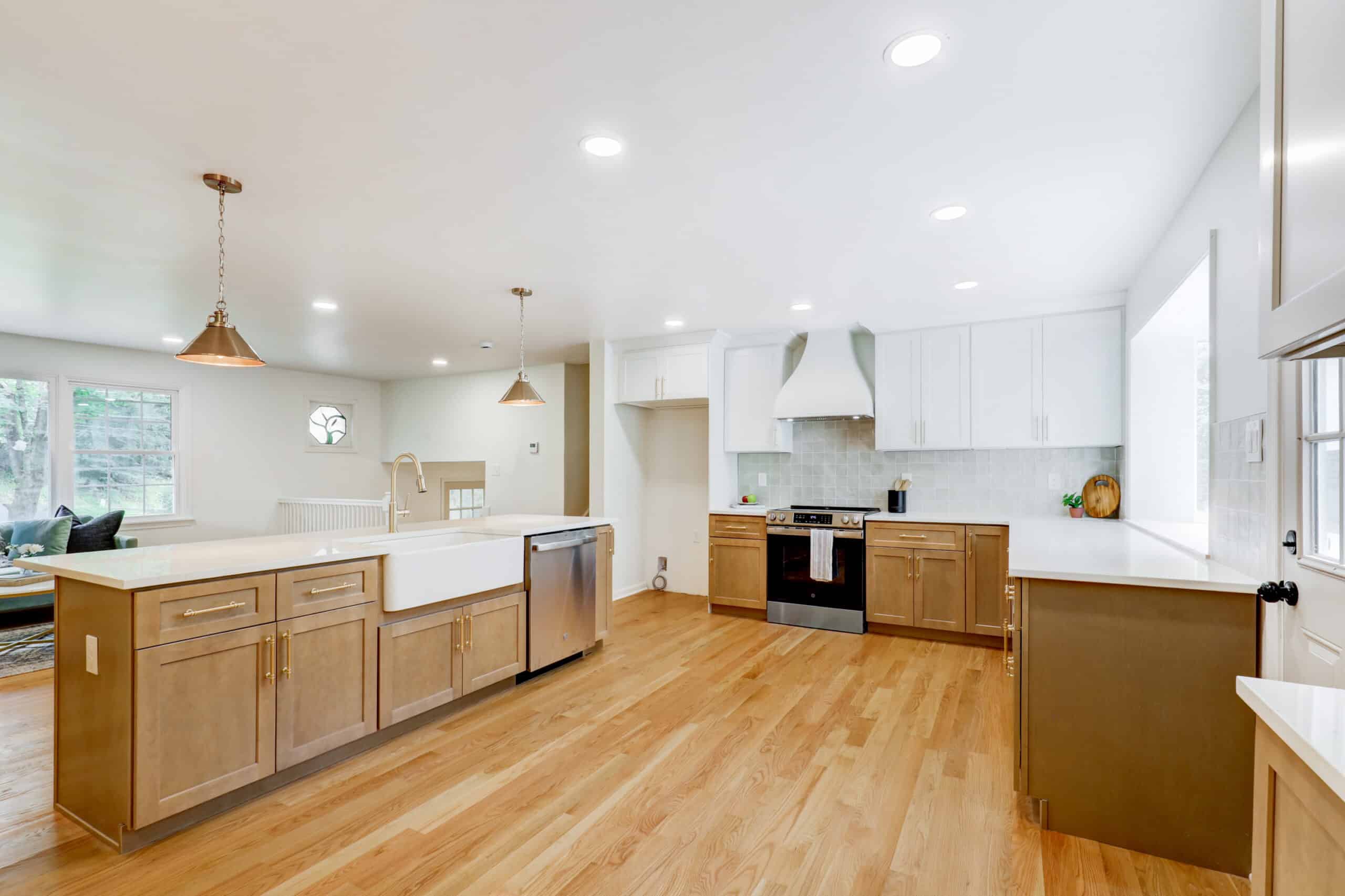
Awakened Kitchens offers five coordinated starting points in its kitchen design gallery: Crisp Classic, Natural Elegance, Two Toned, Two Toned Blue, and Sage Green. They make it easier to compare whole palettes before refining the details for your Central Pennsylvania kitchen, and you can also start from a custom catalog color.
What is the difference between the five kitchen collections?
Crisp Classic pairs white shaker cabinets with black hardware. Natural Elegance uses natural shaker cabinets with black hardware. Two Toned combines white and natural cabinetry with brass finishes. Two Toned Blue pairs deep blue lower cabinets with white uppers and brass finishes. Sage Green pairs sage green shaker cabinets with natural wood. The gallery shows coordinating countertops and backsplash selections, with final availability and scope confirmed in the proposal. Photos may include separately priced features.
| Starting style | Visual direction | Question to answer with samples |
|---|---|---|
| Crisp Classic | White cabinetry with dark accents | Does this white work with the floor, trim, and countertop? |
| Natural Elegance | Wood grain with a lighter work surface | Does the wood tone complement the finishes that will remain? |
| Two Toned | Contrast between white and natural cabinetry | Where should the change in finish occur in this layout? |
| Two Toned Blue | Deep blue lowers under white uppers | Does the blue stay rich, not too dark, in your evening light? |
| Sage Green | Soft green cabinetry with natural wood | Does the green stay calm in both daylight and evening light? |
Use these as starting points, not rigid instructions. Ask which adjustments are available within the package and which require separate selection or pricing. Review our package scope and pricing before assuming everything visible in a photo is included. To compare more door styles and finishes, browse NorthPoint Catalina (PDF) and Wolf Classic Grove. Paint to match is also available as an upgrade.
When should you choose white kitchen cabinets?
Consider white cabinets when you want the cabinetry to form a simple painted background for other details. Compare the actual white with countertops, backsplash, trim, and flooring. Two surfaces both described as white can still look noticeably different together, so an online color label is not enough to approve a combination.
Start with the parts of the home you will keep. Place the cabinet sample beside existing trim or flooring, then add the proposed countertop and tile. If something looks uncomfortable, change one sample at a time so you can identify the cause.
Think about the level of contrast you enjoy. Black pulls will read differently from hardware close to the cabinet color. Rather than asking whether one finish is universally correct, compare how prominent you want the handles to be.
When should you choose natural wood cabinets?
Consider natural wood cabinetry when visible grain and a wood finish are important parts of the look you want. Compare the proposed cabinet sample with any wood flooring, trim, or furniture that remains in view. Ask about expected variation and review a representative door sample before approving the finish.
A kitchen does not have to contain one identical wood tone everywhere. What matters is whether you like the combination in the actual room. Test the proposed cabinet alongside the existing floor rather than relying on separate photographs taken in different lighting.
Pay attention to the transition into adjoining rooms. If your kitchen is open to the dining area, include the dining furniture in your sample review. If it is visually separate, you may have more freedom to give the kitchen its own character.
How do you make two-tone kitchen cabinets feel intentional?
Give each finish a clear place in the layout. You might use a contrasting finish on an island, on lower cabinets, or on one defined cabinet grouping, depending on the available selections. Review the full elevation drawing so the color change looks deliberate from each entrance to the room.
Do not decide from a single cropped view. A two-tone arrangement can look balanced from the sink while feeling uneven from the dining room. Ask to see where the finishes meet at corners, tall cabinets, and exposed ends.
Keep the rest of the palette manageable while testing the cabinet contrast. Introduce the countertop, backsplash, and hardware together, then decide whether any one element is competing for attention. There is no need to make every surface a focal point.
Why do cabinet colors look different at home?
The light and surrounding finishes change how a color appears. Benjamin Moore recommends bringing samples home to observe them under natural and artificial light in its color-selection FAQs. Use that approach for the entire kitchen palette, including cabinet doors, countertops, tile, and paint.
Electric lighting also has a specified color appearance. The U.S. Department of Energy explains that this is described by correlated color temperature, measured in kelvin, in its lighting color guidance. Review samples under the lighting you plan to use, especially if fixtures or bulbs are changing.
Here is a practical sample routine:
- Set the cabinet sample vertically, as the finished door will sit.
- Place the countertop sample horizontally below it.
- Add the backsplash and a hardware sample.
- Check the group during daylight and after dark.
- View it from the kitchen and the adjoining room.
- Record the exact selection names before approving anything.
Photographs help record your choices, but make the final color decision from the physical samples whenever possible.
Frequently asked questions about cabinet colors
Are white kitchen cabinets going out of style?
A trend forecast cannot decide whether white cabinets suit your home. Compare the actual finish with the rest of the room and consider how long you want to live with it. If you like a quieter palette, white may remain a useful starting point regardless of changing online preferences.
Can you mix wood cabinets with wood flooring?
Yes, but compare the actual finishes together before committing. Decide whether you prefer a close relationship or a clearer contrast between the floor and cabinets. Include furniture visible from the kitchen. A sample review in the room is more useful than assuming all wood finishes naturally match.
Do two-tone cabinets require a kitchen island?
No. Two-tone cabinets can use different finishes on other clearly defined groups, subject to the cabinet options and layout. Review the whole room drawing before choosing the division. The finish change should make sense around tall cabinets, corners, and visible ends, not only in one appealing photograph.
Choose a palette you want to live with
Homeowners planning kitchen remodeling in Chester County can begin with a preferred collection, then test it against the actual room. Request a consultation to discuss the available selections, the finishes you intend to keep, and the scope needed to bring them together.