How to Choose Kitchen Cabinets Beyond the Door Style
Choose kitchen cabinets by comparing the complete product: cabinet boxes, doors, drawers, hardware, finish, storage arrangement, and warranty. A door sample helps you choose a look, but it cannot show how a loaded drawer operates or whether the cabinet configuration suits your cooking routine. Request specifications for the actual cabinet line being proposed.
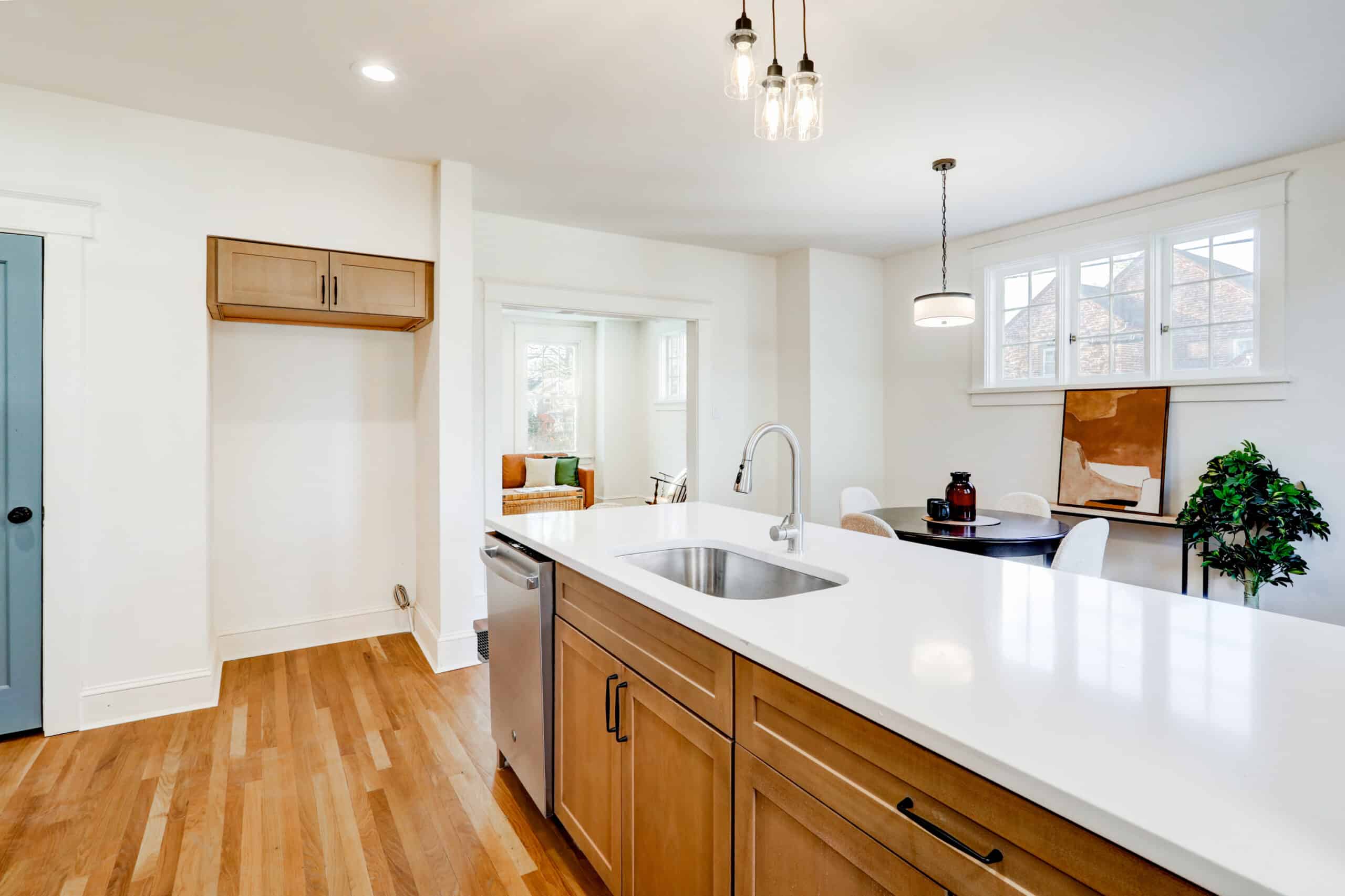
For a coordinated Central Pennsylvania remodel, use Awakened Kitchens’ kitchen design gallery to narrow the visual direction. Then work through the practical questions below before approving a cabinet order.
What parts of a kitchen cabinet should you compare?
A cabinet is an assembly of different components. The box forms its structure, while doors and drawer fronts create the visible appearance. Hinges and drawer slides control movement. Compare the specifications for each component rather than treating terms such as wood, premium, or soft-close as a complete description of quality.
| Component | Question to ask |
|---|---|
| Cabinet box | What material is used, and how is the cabinet assembled and installed? |
| Doors and drawer fronts | What are they made from, and how is the finish maintained? |
| Drawer boxes and slides | What load is supported, and how much of the drawer can you access? |
| Hinges | Are they adjustable, and how are replacement parts obtained? |
| Shelves | Which shelves adjust, and what does the manufacturer specify for loading? |
| Finish | Which cleaners are approved, and what damage is excluded from coverage? |
| Warranty | Who supplies the warranty, what is covered, and who handles a claim? |
Keep a copy of the specification with the proposal. That gives you something definite to compare if you are considering an alternate line or reviewing a substitution.
Awakened Kitchens’ package cabinets come mainly from two lines: NorthPoint Cabinetry’s Catalina, from its Premier collection, and Wolf Classic’s Grove. Browse the NorthPoint catalog (PDF) and Wolf Classic Grove for door styles and finishes, then confirm the exact door style and finish in your proposal. Paint to match is available as an upgrade.
Are plywood cabinets automatically better than particleboard cabinets?
The material name alone does not establish the quality of the finished cabinet. Compare the particular product’s construction, hardware, finish, installation requirements, and warranty. If a proposal specifies plywood boxes, confirm which components that covers. Cabinet boxes, shelves, doors, and drawer fronts do not necessarily use the same material.
The Environmental Protection Agency identifies hardwood plywood, medium-density fiberboard, and particleboard as composite wood products used in items including kitchen cabinets. Its consumer guide to composite wood standards explains emissions requirements and labeling. Ask the supplier for the applicable product information instead of assuming a material name answers every performance or emissions question.
A helpful showroom conversation begins with the cabinet you will actually receive. Open it, look inside, and ask the representative to point out the specified components. If an advertised feature is important to your decision, have it identified in the written order.
What does soft-close tell you about a cabinet?
Soft-close describes a closing feature, not the quality of the whole cabinet. Compare how the actual door or drawer feels, whether it opens far enough for your needs, and whether the hardware can be adjusted or replaced. Ask about the proposed hardware and available options rather than assuming every soft-close mechanism is equivalent.
Try the movements you repeat at home. Open a deep drawer as though it holds your heavy cookware. Reach toward the back of a lower cabinet. Test whether a handle feels comfortable and whether you can use it easily from your normal standing position.
Those small actions often reveal more about day-to-day suitability than a photograph. Bring measurements for awkward items such as a stockpot, mixer, or serving platter. A cabinet that looks generous can still be the wrong shape for what you need to store.
How can you assess cabinet durability without guessing?
Look for documented testing, clear specifications, and a useful warranty for the exact product line. The Kitchen Cabinet Manufacturers Association’s A161.1 certification program evaluates cabinet structure, drawers, doors, and finishes. If a supplier cites that certification, ask them to identify the certified manufacturer and line.
Certification information is a way to evaluate a claim; it does not establish that every cabinet offered by a remodeler is certified. Ask us to confirm the available documentation for the exact cabinet selection in your proposal.
Also ask who handles an issue after installation. A homeowner should know whether to contact the remodeler, distributor, or manufacturer, and what records are needed. Keep the product name, finish, order details, and care instructions together.
Which storage choices should you prioritize?
Prioritize storage around the items and tasks you use most. Decide where dishes return after washing, where cooking utensils belong, and where food preparation happens. Compare a written storage plan with your present kitchen before adding accessories simply because they look appealing in a showroom.
Make a short inventory:
- Items used every day, including plates, glasses, pans, and lunch containers.
- Large items that do not fit comfortably in the current kitchen.
- Supplies you want near the sink, preparation area, or cooking surface.
- Items you rarely use and could store elsewhere.
- Anything that needs special access or a particular load capacity.
For each proposed accessory, ask what it solves and what usable space it occupies. Request dimensions for the storage area that remains after the mechanism is installed.
Our kitchen package details are a starting point for scope. Confirm cabinet configuration, specific products, and any storage upgrades in the proposal rather than treating a cabinet count as a complete kitchen plan.
Frequently asked questions about choosing kitchen cabinets
Should I choose the cabinet color or layout first?
Start with the arrangement and storage needs, then refine color and finish alongside countertops and backsplash. You can explore looks early, but the approved cabinet order must fit the room and appliances. A color decision is easier to revisit before ordering than a cabinet configuration installed in the wrong place.
Does a higher cabinet count mean more useful storage?
Not necessarily. Cabinet widths, drawer arrangements, internal fittings, and access all affect usable storage. Compare where your belongings will actually go. Several awkward cabinets can be less helpful than a smaller number of units that suit the items you use and the way you move through the kitchen.
Can I choose cabinets using online pictures alone?
Pictures are useful for narrowing a style, but request physical samples and product specifications before committing. Examine the finish, handle, and door profile, and review the storage plan. Confirm the final selection name in writing so the image you liked translates into an identifiable product order.
Bring a storage problem to the consultation
Instead of asking only for new cabinets, explain what is difficult about the ones you have. Homeowners considering kitchen remodeling in Reading can bring photographs and an inventory to a kitchen consultation. Those details help turn a preferred style into a kitchen that works for the household.