
How Much Does a Kitchen Remodel Cost in Central PA?
A kitchen remodel in Central Pennsylvania should be budgeted around the work your home needs, the materials you choose, and the conditions uncovered during construction. Awakened Kitchens advertises a starting package of $25,000 for a kitchen replacement that largely retains the existing layout. Your written proposal determines the actual project price.
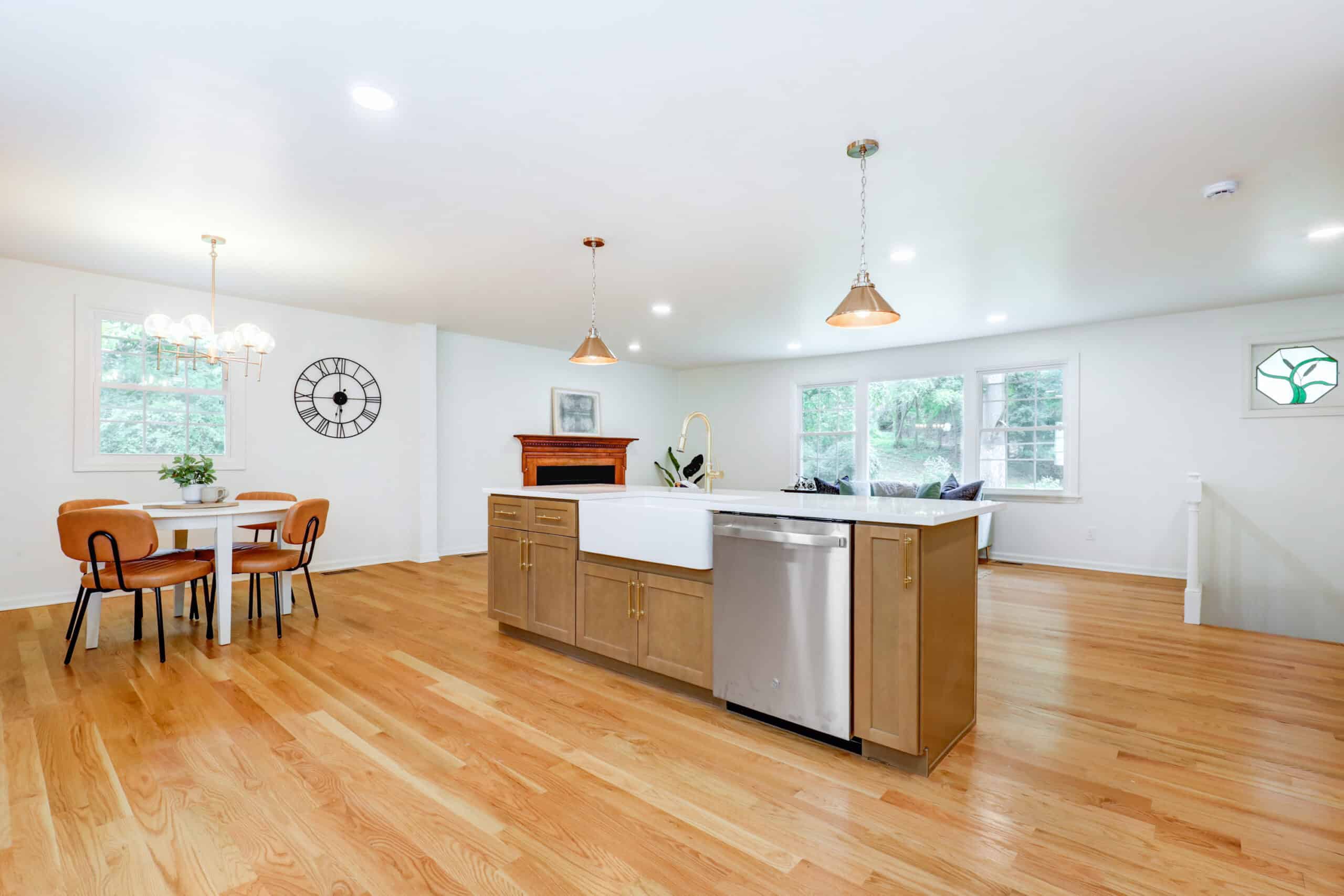
That starting figure is useful, but it is not a regional average or a price cap. If you are comparing quotes in Lancaster, York, Harrisburg, or nearby communities, first compare what each contractor has included. Our kitchen package and pricing page explains the starting scope and separately priced work.
What should a kitchen remodeling budget include?
A useful kitchen budget includes the contracted renovation, separately selected additions, a reserve for unexpected conditions, and the household costs of living through the work. Write these amounts separately. A single total without an itemized scope makes it difficult to see whether appliances, flooring, permits, and finishing work have been covered.
Use this worksheet before accepting a proposal:
| Budget category | What to record |
|---|---|
| Contracted kitchen work | The final written price and its included materials and labor |
| Selected additions | Appliances, flooring, changed layouts, or upgraded fixtures |
| Property-specific work | Required permits and identified repairs or utility changes |
| Contingency | Money reserved for conditions that cannot be fully assessed in advance |
| Household expenses | Temporary meals, storage, or accommodation if needed |
Avoid counting an item twice. If your written proposal already includes a permit fee or a particular repair, it belongs in the contracted total. Your reserve is separate money available if genuinely additional work becomes necessary.
Is $25,000 enough for a complete kitchen remodel?
$25,000 is Awakened Kitchens’ advertised starting point for its base package, subject to measurements, configuration, selections, and site conditions. A kitchen that fits the agreed scope may be a suitable candidate. Moving walls, buying appliances, replacing flooring, or choosing materials beyond the package can increase the final amount.
The package brings cabinets, selected stone countertops, backsplash, and installation into one coordinated project. Review the exact proposal rather than assuming every feature in an inspiration photograph is included.
Our kitchen estimate calculator lets you explore a planning budget. Its allowances help start the conversation; they are not fixed upgrade quotes. Save your preferred selections and identify which additions you would remove first if the measured project costs more than expected.
What usually changes the price of a kitchen remodel?
The price changes when the quantity, complexity, or scope of the work changes. A larger cabinet configuration, more countertop area, relocated utilities, and repairs all create different estimating requirements. Ask the contractor to identify the assumptions behind the number so you can distinguish a firm selection from an unresolved allowance.
The layout matters. Replacing cabinets around existing appliance and sink locations is a different project from moving the kitchen into another room. Before paying for a layout change, identify the daily problem it solves. Extra walking space or a usable preparation area may justify the work; moving a sink solely to copy a photo may not.
Appliance details matter. Record model numbers and installation requirements before approving cabinetry. An appliance purchase and the labor to install it are separate line items. Reusing an appliance also requires checking that it fits the new plan.
The edges of the project matter. Decide where flooring stops, which walls get painted, and how the kitchen meets the adjoining room. These boundaries are easy to overlook when attention is focused on cabinets and countertops.
Existing conditions matter. Ask how the contractor will document and price a repair discovered after removal. A useful answer explains who contacts you, what information you receive, and when approval is required.
How much should you set aside for unexpected work?
The National Association of the Remodeling Industry recommends a contingency of 10% to 20% in its remodeling budgeting guidance. Discuss the appropriate reserve for your property with the contractor. An older kitchen with unresolved conditions may need a different approach from one whose scope is already well understood.
For illustration, 10% of $25,000 is $2,500 and 20% is $5,000. Those are arithmetic examples, not additional Awakened Kitchens charges or a promise that a particular reserve will cover every surprise. Planned upgrades should be priced before the reserve is calculated, rather than quietly consuming money intended for unexpected work.
How can you compare kitchen estimates fairly?
Compare the written scope before comparing the final totals. The Federal Trade Commission says a written estimate should describe the work, materials, completion date, and price in its guide to avoiding home improvement scams.
Put the proposals side by side and ask:
- Are the cabinet quantities and configurations comparable?
- Are countertop material, fabrication, and installation included?
- Does each price include removal and disposal?
- Are appliance purchases separate from installation?
- What has been allowed for fixtures, permits, and repairs?
- How are changes priced and approved?
A lower number may represent a smaller project. A higher number may include work you did not request. Ask each contractor to clarify the difference before deciding which proposal fits your goals.
Frequently asked questions about kitchen remodeling costs
Is $10,000 enough for a kitchen remodel?
A $10,000 budget needs a carefully limited scope. It may be better directed toward selected improvements than a complete replacement, depending on local quotes and the kitchen’s condition. It is below Awakened Kitchens’ advertised starting package, so discuss the budget early before planning a full package remodel.
What is the most expensive part of a kitchen remodel?
There is no single answer for every kitchen. Cabinetry, installation, structural work, and utility changes can each represent a substantial part of a particular proposal. Request a scope breakdown rather than assuming one category will always dominate. The largest cost in your project should follow from its actual requirements.
Should I remodel everything at once or in stages?
Compare the dependencies before splitting the work. A countertop chosen around cabinets that will soon be replaced may need to be revisited. Ask for a whole-room plan, then identify changes that can genuinely stand alone. Staging makes more sense when it avoids undoing work you have already paid for.
Start with the kitchen you have
Photograph the room, list the appliances you want to keep, and write down the three problems you most want to solve. Homeowners exploring kitchen remodeling in Lancaster can use those notes to make the first conversation more specific.
When you are ready, request a kitchen consultation with your location, priorities, and approximate budget. The next useful number is a written price for your kitchen’s agreed scope.